
| Key Takeaways |
|---|
| Hardwax oil vs Lacquer, cleaning chemistry, and preventing grain raising with Osmo maintenance regimes. |
Problem: After investing in a professional sand and finish, many UK homeowners ruin their floors within months by using the wrong cleaning products or failing to maintain the protective layer.
Agitation: Using high-alkaline supermarket cleaners or steam mops is the fastest way to destroy a timber floor. This causes the wood to swell, leads to grain raising, and strips away the expensive Osmo Hardwax Oil or lacquer, leaving the wood vulnerable to moisture and stains.
Solution: A scientific maintenance regime. Understanding the difference between water-based vs hardwax oil finishes allows for targeted care that can extend the life of your floor for decades without needing a full re-sand.
Maintenance Protocols: Oiled vs Lacquered
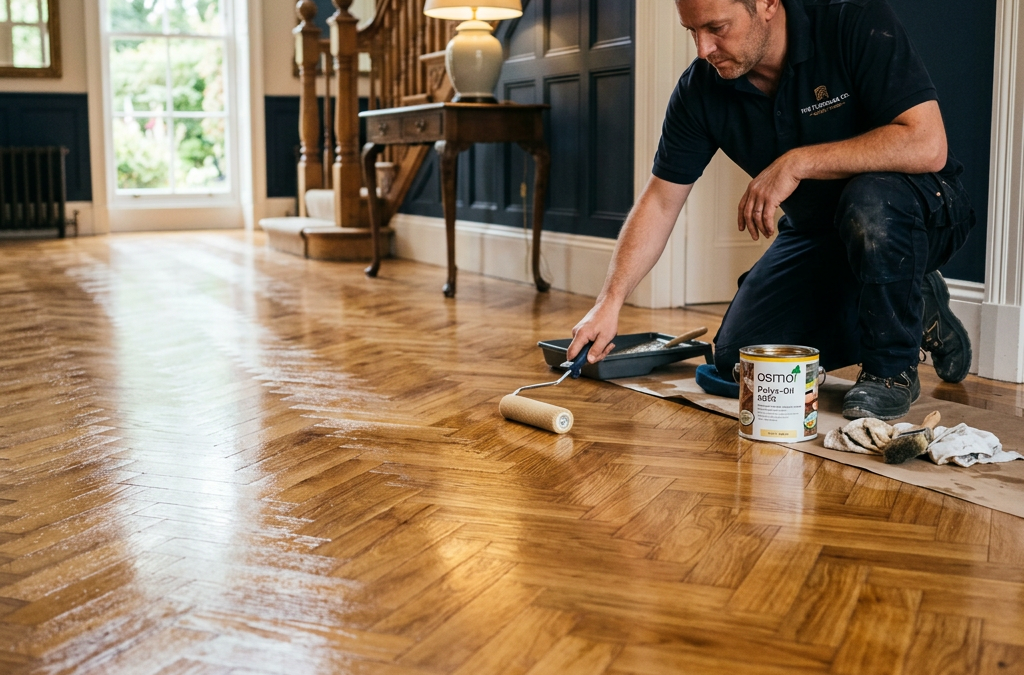
If your floor is finished with Osmo Polyx-Oil, it is a micro-porous finish. It allows the wood to breathe while remaining water-repellent. To maintain this, you should use Osmo Wash and Care for routine cleaning and Osmo Liquid Wax Cleaner for periodic rejuvenation.
Pro-Tip: Curing and Humidity
UK humidity can slow down the curing of oils. Ensure the room is well-ventilated. A typical Osmo coat takes 8-12 hours to dry. If the moisture content of the room is too high, you may experience a ‘tacky’ finish. Never lay rugs back down for at least 10-14 days after a fresh oil application.
Learn more about Hardwax Oil Benefits or our Residential floor Restoration services. Trust the experts at Floor Sanding Wimbledon for all your maintenance needs. For the best products, visit Osmo UK.